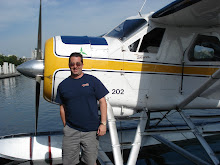
Saturday, 17 November 2012

Ernest G. Stout 1913-1995


Ernest Stout, design engineer of the Convair Company. His firm produced one of the American Navy's two V.T.O. turboprop prototypes; in addition he has pioneered the Sea Dart hydro-ski fighter which is land-based, but which uses water (or snow or ice) for take-off and landing.

Tuesday, 23 October 2012

Anne Burns 1915-2001


Champion glider pilot who risked her life investigating air disasters

Anne Burns was an eminent aeronautical scientist and a champion glider pilot; she also played a key role in investigating the causes of some of Britain's most serious aircraft disasters.

In 1954, two BOAC Comets broke up over the Mediterranean, one over Elba and the other above the island of Stromboli. Both planes had been flying at more than 25,000 ft. Coupled with an earlier disintegration over Calcutta, these disasters jeopardised the future of British civil aviation. Anne Burns had been appointed principal scientific officer at the Royal Aircraft Establishment (RAE) in 1953, and the following year she took part in months of tests which eventually led to the detection of metal fatigue in the Comet jet airliner.

The only woman in a team of 20, she would spend hours at a time in an unpressurised cabin, often at an altitude of 40,000 ft, probing for solutions which had to be found speedily if BOAC was to restore passenger confidence. "We just flew about," she later recalled, "waiting for the windows to fall out."

The conditions were, in fact, extremely hazardous and when an inquiry was later conducted into the Elba crash, Sir Lionel Heald, who was representing the Crown, praised Anne Burns's bravery, describing how on each of her experimental flights, designed to produce the actual conditions of the crash, "no one knew what had really happened or what danger there was". In 1955 she received a Queen's Commendation for Valuable Services in the Air in recognition of her considerable contribution to aircraft safety.

She was born Anne Pellew on November 23 1915, the daughter of Major Fleetwood Pellew whose forebear Sir Edward Pellew was a naval hero of the Napoleonic Wars. Anne was educated at Abbey School in Reading and aged 12 made her first flight in a Gipsy Moth from Woodley aerodrome. She later went up to St Hugh's, Oxford where she took a First in Engineering Science. As an undergraduate, she owned a noisy sports car in which she would career around the city until, fearing the worst, the proctors impounded the vehicle. However, she directed some of her enthusiasm and prodigious energy to sport, winning a hockey Blue and squash Half Blue.

Following research work under Professor Richard Southwell at the university's engineering laboratory, she joined the RAE in 1940. There she qualified for a pilot's licence in a de Havilland Tiger Moth biplane trainer, and was involved in flight test programmes for RAF and Fleet Air Arm aircraft of many types. At the RAE she also met her future husband, Denis Burns.

As a member of the RAE's structures department Anne Burns was mainly concerned with the measurement of structural loads in flight and the effect of such loads on the fatigue life of aircraft. For some years she also conducted an investigation into atmospheric turbulence in relation to aircraft structure, pilot performance and flying procedures. She played a leading role in the testing of the English Electric Canberra - Britain's first jet bomber - flying at low levels in Britain and North Africa and at high altitude in Australia and the United States.

Her contributions to reports on turbulence were of great significance. She became an expert on CAT - clear air turbulence - the rare natural phenomenon sometimes encountered by airline captains of flying into a "brick wall" in the sky. Her interest in this area led her to buy an ultra-light French-built RF-4, which was, in effect, a glider with an outboard engine capable of being switched on and off. In this rather fragile plane she would fly over the Pennines and the Welsh mountains looking for "brick walls". "Luckily," she explained, "my husband is both a scientist and a glider pilot and we have no children. He doesn't worry. In a way it's rather exciting - like skiing in the sky - quite apart from the thrill of scientific discovery."

Burns's enthusiasm for gliding had begun during the war when she took part in launch tests for wartime troop carrying gliders. She later went on to gain a formidable reputation in recreational and competition gliding. In 1955, after only a year's experience flying glider planes, she established a women's gliding record of 134 miles when she flew from Lasham in Hampshire to Market Drayton in Shropshire. With typical modesty, she ascribed her win to "beginner's luck".

In 1957 she became the first woman to cross the Channel in a glider. She consistently bettered her own record times and in South Africa in 1961 she and her husband broke five world and 12 British records. At the age of 50, as the holder of multiple gliding records, she was awarded the Lilienthal Medal of the Federation Aeronautique Internationale, and in 1967 she received the Founder's Medal of the Air League.

Other gliding awards include the Jean Lennox Bird Trophy in 1959, the Brabazon Cup in 1961 and 1963, and the O P Jones Cup in 1966, which recognised her as the national gliding champion of Great Britain. In 1962, Denis and Anne Burns were jointly awarded awarded the Royal Aero Club's Britannia trophy for their gliding achievements, which were described at the time as the most "dazzling display in any field of aviation since the beginning of flying history".

Anne Burns's distinctions as an aeronautical scientist were no less impressive. She won another Queen's Commendation for Valuable Services in the Air in 1961, the Royal Aeronautical Society's R P Alston Medal (1958) and the Whitney Straight award in 1968. In 1977 a glider she had been piloting near Andover hit a bird and went into freefall. As she bailed out, Anne Burns became entangled in her parachute and ended up landing in the branches of a tree.

Although this automatically entitled her to membership of the Caterpillar club - whose members are pilots who have jumped for their lives - she decided that her flying days were over. Her husband, Denis Owen Burns, whom she married in 1947, died in 1990.

Tuesday, 17 July 2012

Francis Melvin Rogallo 1912–2009


Francis Rogallo was an aeronautical engineer who, beginning with a model made from a kitchen curtain, designed the wing that led to hang gliding, paragliding, sport parachuting and stunt kite flying.He was born Jan. 27, 1912, in Sanger, California and graduated from Sanger High School in 1928.He went on to graduate with an advanced degree in Mechanical Engineering and Aeronautics in 1935, one of the first to do so, from Stanford University.After completing his college studies, Rogallo joined the National Advisory Committee for Aeronautics (NACA), later to become the National Aeronautics and Space Administration (NASA), in 1936 in Hampton, Va., and embarked on what would be a long and distinguished career in aeronautics. In 1939 he married the love of his life Gertrude Sugden Rogallo, a young educator from the Hampton Roads area. The couple raised four children, Marie, Robert, Carol, and Frances, and celebrated 68 years of marriage together. While Roger was working as an aeronautical engineer in the NACA wind tunnels and Gertrude was busy as a homemaker, they actively pursued at home their passion and dream of creating a vehicle to make flight affordable and available to everyone. While pursuing their dream, the couple met the legendary inventor Orville Wright who fueled their spirit of invention. Francis held several patents from his work at NACA and NASA, but was proudest of the one he and Gertrude filed in 1948 as co-inventors of a "flexible kite" based on their joint efforts at home in their leisure time. The device is one of the simplest airfoils ever created, a wing totally without stiffeners creating lift and carrying payloads. This Rogallo Wing has made possible many sports including hang gliding, paragliding, sport parachuting, stunt kite flying, and kite boarding enjoyed by millions of people. The Rogallos are recognized worldwide for their contributions to sport aviation and have been honored in Japan, Australia, Switzerland, Germany, and France. Honors in this country for Francis include recognition by the National Air and Space Museum "for outstanding achievement in aerospace technology", presentation of the Order of the Long Leaf Pine from the State of North Carolina as one of the 100 aviation heroes by Senator Elizabeth Dole at the Century of Flight ceremonies in 2003, and induction of both into the Paul Garber Shrine at the Wright Brothers National Memorial. The couple's portrait hangs today in the Wright Brothers National Memorial in Kill Devil Hills, N.C. Rog also was an inductee of the North Carolina Sports Hall of Fame and of the Public Education Hall of Fame of the California School Boards Association, in the inaugural class in 1984, and both are honored with a pylon at the Century of Flight Monument in Kitty Hawk, N.C.

Saturday, 12 May 2012

E A 'Chris' Wren 1909-1982 (Cartoonist)


The Aeroplane artist E. A. Chris Wren was the envy of Flight magazine. His column Wroundabout and the
aerodynamic animation of his aircraft caricatures, which somehow looked more real than the originals, and his wartime "Oddentifications" won him an enormous international aviation fan club. In fact it was because of Wren that Flight started Straight and Level. The Empire Test Pilots School mess is filled with his drawings, of the countless international pilots who have attended it over the years. He died at the 1982 ETPS annual
dinner—an occasion he would never miss—at a youthful 73 and at the height of his powers.

Dr Eric S Moult Ph.D., B.Sc, M.I.Mech.E., F.R.Ae.S 1903-


Dr E. S. Moult, Ph.D., B.Sc, M.I.Mech.E., F.R.Ae.S.,chief engineer of the de Havilland Engine Co., Ltd.was concerned with aero-engine design from a time soon after the First World War, and in the inter-war years was associated with the late Major F. B. Halford in the design and development of such famous engines as the D.H.Gipsy and the Napier Rapier, Dagger and Sabre. He became chief engineer of the engineering departments of the de Hayilland engine and propeller divisions in 1941 and on the formation of the D.H. engine company in 1944 was appointed its chief engineer. He was a member of the Council of the R.Ae.S. in 1951-53. He became a director in 1955, and was technical director during 1957-62. In the latter year he was appointed technical director of Bristol Siddeley Engines Ltd, and became technical director of the Small Engine Division in 1962.

Friday, 11 May 2012

Friday, 30 December 2011

Sir Robert L.Lickley CBE 1912–1998


Sir Robert Lang Lickley CBE FRSE FEng FRAeS FIEE


Robert Lickley was an aeronautical engineer of very high repute in both the British and American industries. Born in Dundee on 19 January 1912, he attended Dundee High School, graduating from Edinburgh University before proceeding to Imperial College London whence in 1933 he joined the Hawker Aircraft design office at Kingston-on –Thames. He was thus one of the early migrants from Scotland – and Wales – to the growing aircraft industry mainly based in southern England, which offered technical and intellectual opportunities to bright young engineering graduates.
Under Sydney Camm, Lickley made his mark with Roy Chaplin in the mid-Thirties by creating the project design of a single-seat eight-gun monoplane fighter. This project was conceived by the Hawker team as their reaction to the outcome of the Air Ministry specification F5/34 which Sydney Camm dismissed as “just not good enough”. The Hawker team incorporated the new Rolls-Royce PV12 engine, a retracting undercarriage and a fabric covered monoplane wing with
eight Browning 0.303 machine guns buried therein. This formidable concept eventually emerged as the ‘Hurricane’, which proved a huge advance on its predecessors, very robust, and a good steady gun platform.
The Air Ministry was so impressed by the prototype’s performance that a production order was placed in 1936 for no fewer than 600 of the type. This enabled the RAF to have quite a number of squadrons in service by the critical earlysummer of 1940. During the Battle of Britain which followed, Fighter Command used its Hurricanes to great effect, when they shot down more enemy aircraft than all other aircraft and ground forces combined. During the Second World War Lickley was deeply involved as chief project engineer in the development of the Hurricane,
Typhoon, Tempest and Fury. He thus saw through the final stages of evolution of the piston-engined fighter to its pinnacle of performance with a top speed of around 450mph, then ushered in the jet fighter age of 500mph for Hawkers with the P1040, which ultimately emerged as the Royal Navy’s shipborne Sea Hawk.
After the war he was appointed Professor of Aircraft Design at the new College of Aeronautics at Cranfield, in Bedfordshire. In this appointment he brought on many able young engineers who later made their mark throughout the industry. These were fortunate people, as their professor had up-to-date and wide experience of aircraft design, development, and production and was thus able to impart to them all the lessons he had learned in his previous years with Hawker.
However, an opportunity beckoned in 1951 to return to industry as Chief Engineer and Technical Director of Fairey Aviation. There he showed great skill in building up a team of mostly young engineers comprising mathematicians, aerodynamicists, structural, and aero-elasticity specialists, together with development engineers and test pilots. Thus equipped, Fairey’s was able to cope with a wide range of aircraft projects including the Gannet anti-submarine aircraft for the Fleet, with a later, vital variant, the Airborne Early Warning (AEW) version. These were the ‘bread and butter’ production aircraft for Fairey at this time. New projects included the Fairey Delta 2, a supersonic delta-wing experimental aircraft which in March 1956 smashed the world’s air-speed record by the huge margin of 300mph, reaching 1,132mph over a measured course off the Sussex Coast. The engineering team of designers,
draughtsmen, and specialists was housed in a new, but modest, building at the Hayes, Middlesex headquarters of Fairey Aviation. It was remarkable that the planning and preparations for the world air speed attempt by the FD2, to be piloted by Peter Twiss, was confined to those few directly involved and was unsuspected by those others who worked in the same small building. It was a tribute to Bob Lickley’s ability to impress upon his staff, and to sustain this pressure, of the need for secrecy, mainly to ‘catch out’ the Americans, then holders of the record. A good example of ‘Chinese Walls’ of which we hear so much nowadays, albeit in a City context.
Being developed at the same time was the Fairey Rotodyne, a large, fast rotary-wing aircraft of 33,000lb design weight capable of vertical take-off and landing and aimed at the short-haul intercity market. The sole prototype flew several hundred hours, setting a world-speed record of 307kph over the 100km closed circuit in January 1959, a record that stood for many, many years. However, the Rotodyne was cancelled in 1962 on the grounds of budgetary shortage and
external noise.
In addition, Fairey developed as a private venture a very small tip-jet propelled helicopter, the Ultra-Light, for a communication and observation role in the Royal Navy, operable from small ships. However it was not adopted, the Ministry of Supply sticking by the larger, heavier, Saunders-Roe Wasp, then at the prototype stage. These Fairey projects, Gannet, FD2, Rotodyne and Ultra-Light were all handled simultaneously by the engineering team at Hayes, where Lickley was by then managing director. The total strength of the engineering team at the time, including experimental shop, test personnel, typists and administrators, was not more than 1,000 people, an amazingly small number compared with those involved in the European Collaborative ventures which followed.

Lickley and Fairey’s suffered a severe disappointment when their new RAF fighter project was still-born by the ill-advised policy of Duncan Sandys as Minister for Defence, then Aviation, who opined that “the day of the manned fighter is over” and that guided missiles would reign instead. Fairey had won the competition with a design based on the successful FD2, so the cancellation very adversely affected the company’s fortunes and also those of the British aircraft industry. In
contrast the French government and industry seized the opportunity by initiating a design based on the FD2 concept that blossomed into the Dassault Mirage, many hundreds of which have been built and sold world-wide. After Westland purchased the UK interests of Fairey Aviation (and Bristol Helicopters and Saunders Roe) in 1960, Lickley decided his future lay elsewhere. He returned to Hawker Siddeley as a director, where he was much concerned with their VTOL (vertical take-off or landing) ideas, which came to fruition in due course as the Harrier.
The Rolls-Royce collapse in 1971 led to Lickley being involved, through the National Enterprise Board, as leader of the board’s Rolls-Royce Support Staff, where he worked hard to restore that company’s aero-engine business to its present successful strong international position.
Bob Lickley was essentially a very private person who never talked of any special hobbies; for recreation, he enjoyed golf, at which he was good enough to be an effective industry representative for several years in the annual golf match between the Society of British Aerospace Companies (SBAC) and the RAF. In the office he was pretty demanding of his
subordinates and perceived shortcomings drew acerbic remarks, which some found rather frightening. However the best response was a robust and well-argued case which Lickley respected. In debate he was a forceful, logical arguer but one able to accept other points of view without rancour. He was an active member of various committees of the Aeronautical Research Council (ARC) between 1946 and 1958, and was a committee member and later a member of council of the SBAC. In addition he was President of the Institution of Mechanical Engineers in 1971 and of the Institution of Production Engineers in 1981 and 1982. He was also an
honorary Fellow of the IMechE, a Fellow of the Royal Aeronautical Society, the Institution of Electrical Engineers, the Royal Academy of Engineering and of the Royal Society of Edinburgh, of which he was elected a Fellow in 1977. The Royal Aeronautical Society awarded him its British Gold Medal in 1957 and its Taylor Gold Medal in 1958. The Universities of Edinburgh and Strathclyde each recognised his contribution to aviation by an Honorary Doctorate of
Science in 1973 and 1987 respectively. Robert Lickley died on 7 July 1998.


Credit George S.Hislop for biography